Relaxed in the shade
Of the colonnade pass
My friend and I traded the talk of the town
All flustered, I asked with a frown…
“Just who was that baptist
Whose breakfast was locusts
Enticing those folks of weak mind to immerse?”
Defensive, his passion outburst…
“The fact is, he was not
The Christ, but his Baptist
The ‘Friend of the Bridegroom‘! In the womb, they first met”
“While Miryam (מִרְיָם) spoke greeting
Who too was with child
Eli-she-va (אֱלִישֶׁבַע), her kin, not by chance felt him dance”
I questioned, “Once grown and a loner become
Why then did some hate him, perchance?”
“God’s prophet, Yo-ḥan-an (יוחנן)
Men’s ire could not stop
He’d scolded the Pharisee clan fearlessly”
“But how?” I said, stifling my glee…
“‘Repent!’ he’d commanded
‘God’s Kingdom has landed!
Flee sin! Turn with haste! Then go prove it: bear fruit!’“
I pressed him, “And next, what ensued?”
“With stinging reproaches
He coached the poor King
That his wife was not his! Yet, repent he would not”
“The queen’s anger quickened
Truth sickened her spleen
To squash it, she wickedly hatched a mad plot”
“Her scheming advanced
At the king’s birthday feast
When Salome danced, he burst out with a vow…”
I beckoned my friend, “Go on, now”…
“To impress, Herod ranted
‘I’ll grant whatsoever
‘To half of my kingdom! Now bring your request’”
“Her mother with boldness
Then told her none other
Than John’s speechless head on a platter would do”
“His oath he well kept
Lest he look like an oaf
And soon, John’s disciples did lay him to rest”
Surprised at myself as
I felt disenfranchised
“So now, who will baptize?” I asked, heart all cold
My comrade’s warm hand gripped my shoulder…
“John clamored, voice bold
‘Behold, God’s own Lamb!’
‘His Son, Who out-hurls the world’s sin‘
“‘I rejoice at His Voice
My joy is now full
For He must increase, and I decrease’
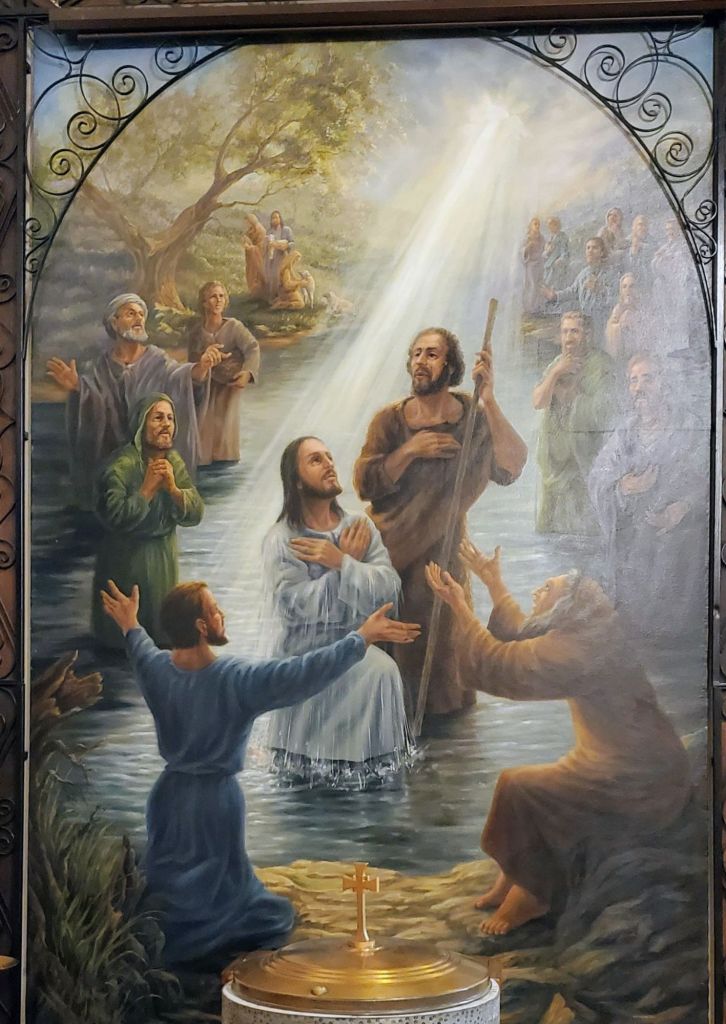
“Unspun were the skies
As he washed God’s pure Son
Who baptizes now with the ‘Spirit and fire’ “
“Let’s search for Him, then!”
Breath-bated, I urged
“And why wait around?” Off we bounded, eyes peeled
And each none the wiser
That this new baptizer
Already was searching for us…
By leading us Jordanward where we’d be found
And once we’d abandoned its shores…
Restored and unbound
*****
Source material: the four Holy Gospels
“Truly I tell you, among those born of women there has not risen anyone greater than John the Baptist; yet whoever is least in the kingdom of heaven is greater than he.” (Matthew 11:11, NIV)